Thursday, May 15, 2014

The Sound of an Era: Sound Chips


The term "8 bit" is different from the later generations of gaming.  No other generation has such a singular meaning when it comes to "8 bit".  If you were to say "16 bit", well you have several ideas that come to mind, and even though there's really 2 options for 16 bit, it muddies the area of nostalgia to the point that you have to make a distinction.  Even later, 32 bit, you have lots of options and then you also have the N64 thrown in there(hint: it wasn't 64 bit).  Today I want to talk about an aspect of "8 bit" that you may not realize contributes to its unified "feel" among its games:  Its sound.

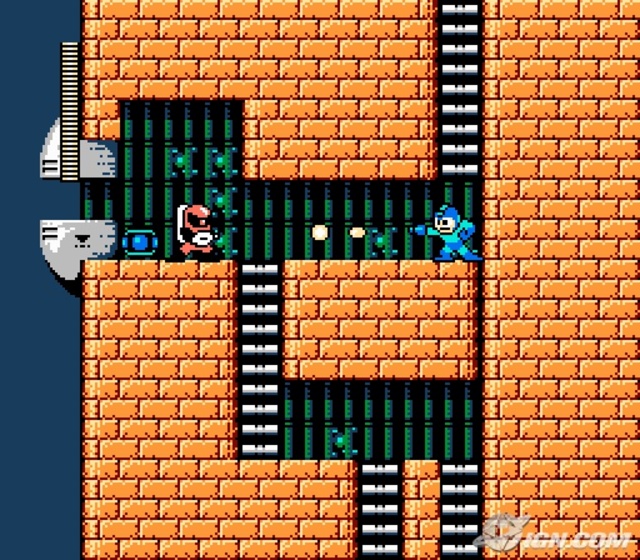
Think about the big games of the day; Contra, Mario, Castlevania, Ninja Gaiden, Mega Man.  Somewhere in those memories are probably the music you heard.  Now, think about the music in your top games... and realize that they all pretty much have the same sounds and effects, just arranged differently.  That's a kinship in gaming that does not run through into the later generations.  The Nintendo had a sound chip in it that everyone used as a common source, and it tied all the games of the era together.

The sound chip inside it had its set of blips and beeps, and the games issued commands of what order they were played in.  Let me put it another way.  With digital, you can record a wide variety of instruments, orchestras, and bands.  You are only limited by reality and sample quality.  The Nintendo Entertainment System shipped with a pre-packed band that you could not change.  All games had the same guitar, bass, and drums that all the others had.  Starting with the SNES, music went digital.  Music was pre-recorded, digitized and played back at a later date, much like how MP3's work.  Your Nintendo Entertainment System was an actual music instrument playing live for you.

DJ culture in Japan and Korea is huge, and their forefathers are the game composers from this era of gaming with sound chips.  In that area you will not only find "8 bit" synth masters, but also "16 bit" because the Sega Genesis also used a sound chip instead of a digital system.  The "west" culture is awakening to the sound, but its old hat over there, where the actual composers of games of the era are producing music in the clubs.  Today in the west, we are modifying old NES's and Gameboys to be used live in synths.  This too has been going on for a long while in Korea and Japan, where these systems(with the Sega Genesis) were actually pretty powerful for this purpose, and very cost effective compared to dedicated synthesizers in the 80's and early 90's.

Our gaming generation eras are not as distinct any longer.  It is hard to pin down what generation a game is from because there is such a wide berth of capabilities between game systems, and then with the bit-perfect recreation of any music imagined into digital format, you can't pick an era by its music either.  With the inclusion of millions and millions of colors, and the virutally limitless resources game makers can choose from to make games, our new eras of games just don't have that "we're all a part of a club" era like the 8-bit days.

Wednesday, May 7, 2014

Iterations or Street Fighter Syndrome

The world of video game journalism thrives on the ability for the "journalists" to be snarky and inject humor into their journalism, that's just the state of things.  One of the ongoing and longest running jokes is about Street Fighter and its numerous editions over the years.  Its an easy joke, and somehow gives the journalist "cred" to say it, with bonus points if they actually think they are the first to make the joke.  

I feel like I have to explain why it makes sense to have updates and iterations to Street Fighter, and indeed other fighting games.  Also maybe even delve into why this is not "Madden-nomics".

A Crowd of Competitors

From the the word "Fight!" Street Fighter was about drawing a crowd of people together to play against one another.  Sure there are CPU controlled opponents and a half baked story in there, but the game is made to be played competitively against humans.  Now, if you have Street Fighter II, Street Fighter III, and Street Fighter IV all done within the span of 3 years, and all of them play different, then you have split your talent pool.  There simply will not be enough people in either to keep it going, and having to keep up with 3 different games just to ensure you have someone to play against is a little nuts.  Let's not forget that if your old version is still popular, you're going to compete against yourself and cannibalize your fans.  Smaller updates means people have no real reason to stay with the past version.  It is close enough that it is painless to move on.  So reason: Iterations don't Split your Fanbase.

Time to Train

Looking at the select screen in Street Fighter IV's later iterations can be daunting, look at the pure number of fighters.  Old players like me had the benefit of learning new characters as they were created.  Instead of learning 50 characters, we got to learn the first 8 in 1991.  Then every couple of years 4 new characters came.  While technique, timing and game change, the way to play each of these characters have stayed consistent.  Still, this is unfair for new players to be expected to know how they all work.  The #1 way to be better at fighting games is to know your opponent, know what to expect from the character.  Because Street Fighter IV came out in 2008, we have had 6+ years to get better at it.  If you spent a few months getting better at it in 2008, it'll only take a little time in 2014 to get your bearings.  So reason: Iterations give you time to learn.

Madden'nomics

Madden will have you pay $60 a year to get updated rosters and some superfluous game modes.  Looking at Street Fighter IV, you might have payed $60 for the original, but to update the previous to the current will cost you $15 bucks each step up... for a month or so, then drop to $10.  Looking at Call of Duty, another annual series, you actually do not have iterations in the same way.  Call of Duty actually has 2, and now 3 developers creating their games and staggering their release.  It is actually 3 years before the next iteration of that "style" of Call of Duty comes out, and so by then there's enough forgetfulness and new features added that it doesn't feel like an iteration.  So another reason:  smaller alterations means smaller budget, means cheaper updates.

Hell is other People

So what about the genre as a whole, why doesn't everyone else do this?  Let me tell you a little secret:  Unless its a once in a life time game like Killer Instinct, they DO.  Look at what is considered high in competitive circles.  Blaze Blue, Guilty Gear; looks like there are a million of those games, there's really only about 2 of each, the rest were iterations.  King of Fighters?  There's about 3 of those, but for a while every year there was an update.  That doesn't matter, they really only redid the game and made new artwork about 3 times.  What of Mortal Kombat?  Ok, here's our dirty little secret: some games are slightly large iterations even if they are numbered different.  Mortal Kombat 1-3, Tekken 1-3, 5-6, Soul Calibur, these games keep the same core game with updated visuals.  I know they add bells and whistles, and I'm not saying anything bad about them; I love ALL those games I mentioned, but its true still.  Are you good at Tekken 2?  Bet you'll kick ass at Tekken 5.  (3 images of Mortal Kombat, 3 different games... believe it or not)

Its just a simple truth that creating a brand new fighting experience every year, or even every other year, just is not good business for fighting game developers.  It would also suck pretty badly for the players as well.  So yea, its an easy jab to make, being snarky and "clever" making the "I'll wait for Street Fighter Omega Awesome Dash update 12", but you're really just showing idiocy, a small mind, and the lack of knowledge in your field to create original and even topical humor.


Tuesday, April 29, 2014

How I categorize Final Fantasy


The Final Fantasy series, as a whole, can be categorized into different eras.  To many people it is the era of Sakaguchi vs the era of Wada/Nomura.  Some people erroneously believe that there is a "Fantasy vs Future" division in the game, which I call "bullshit" because even the first one has a space station and mechs.  Anyone that claims 6 was too advanced likes to forget about sci-fi elements that were in 4(come on... you know... the whale? the giant titan.. its sci-fi).  Anyways, I divide them up differently.

See, I think that Sakaguchi actually made 2 different game franchises under the same title and used the same legacy hallmarks to group them together.  To me, the Sakaguchi era was a Final Fantasy A and a Final Fantasy B that largely took turns for the first six games.  It gets a little messy toward the end, when others got more control of the series.  The term "modern" era denotes the era we are still in now, and also the reality the game takes place in.  Social and cultural cues from our modern society are the norm for these games, and not set in earlier time periods as the earlier games were.  Then we have the easily classified MMO's, and then the tricky to classify FF12.

Final Fantasy A(1, 3, 5)

This archtype was began in the first of the series.  It took a lot of inspiration from games that came from the US that were in turn based on Dungeons and Dragons.  The party does not have a huge cast of characters joining and leaving over time, and instead is based on giving the characters a "job" and have them advance through the jobs as growth.  New characters were not needed because if you needed a different kind of fighter for an area, you simply changed jobs.  I can not say that these focused on the technical aspects of gameplay because actually they were the least adventurous in this aspect.  The combinations of classes and the melding of them in the later versions is really fun, and is the featured core of the series.

Final Fantasy B(2, 4, 6, 7, 9)

These series of games are more focused on giving us a narrative experience.  Characters join and leave the party, and generally you are left with a group of characters to create your adventuring party yourself.  These games prove to be complex because the developers never know who will be in the party, so branching side-stories can happen.  The stories also happen to be more political and sweeping in these games, especially early on, which is why I feel the Ivalice world worked so well in the series.  I put Final Fantasy 9 here, even though it is supposed to be the sendoff of all the 8 and 16 bit eras, the final "farewell" of Sakguchi to the fans of this series.  Some argue that 6 should not be here because of its more victorian/steampunk era, but like I said, you can't really put technology era as a center category in Final Fantasy.

The weirdness of Final Fantasy 7

In the end, because of the hallmarks it uses, I placed Final Fantasy 7 with the "B" series instead of the "modern" series.  I feel like 7 was going to be the start of a whole new era for Sakaguchi, but by this time Square needed a much larger team to make the game, and elements of 7 became intertwined.  It is in transition between Sakaguchi and the new guard at Square Enix.  If you look beyond the setting, looking at the mechanics of the game, the choices in which "Final Fantasy" parts they used, I feel like it is closer overall to the "B" series.  The modern series is focused on literally being fashion forward, while the character designs of 7 are sort of modern, they are still stylized and not based on anything in the current real world.  I can certainly see why others would rank it with the Modern series, so feel free to do as you will.

Final Fantasy Modern(8, 10, 13)

Many claim that the anime styled characters and the technologically advanced setting of Final Fantasy 7 make it the first "Modern" Final Fantasy.  I think the "Modern" set is much more than just that definition.  Looking at game mechanics, story considerations, and overall "tone" of the narrative means that Final Fantasy 8 was the start.  The "Modern" games set a more serious feel to the cast, and the silliness is much more buffoonery than joking in general like the earlier games.  The stories focus more intimately on the characters, with the outer theme of the game taking back seat to the drama inside the group until near the very end of the game when you find out that all the inner drama is actually connected to the overworld epic story lines.  While Nomura did give an anime feel to Final Fantasy 7, I feel that the "Modern" classification is much closer to using realistic clothing and fashion choices, with an emphasis on Japanese culture taking center stage.  They all feel much more like they take current Japanese pop culture.  This era is much more Japanese-centric than the previous games which had a strong European influence.

Alternate Sub-Classifications

Final Fantasy Ivalice(12)

This era's world was created when Square asked Matsuno to create a Final Fantasy world in the style of his politically thrilling "Tactics Ogre" game.  If we're not counting spinoffs, then we only count one.  By the time Final Fantasy 12 was set in Ivalice, there had been 3 games set in this world, and after 12 there have been 3 more.  It is an oddity that is likely to never be repeated, and thus is the odd man out.  Look for my other posts about Ivalice for more thoughts from me, or even an explanation about why Ivalice is so controversial.  Posted Here

Alternate Sakaguchi(1-10, Lost Odyssey, The Last Story)

There are some that consider some of Sakaguchi's games as still "Final Fantasy" games.  Superceding everything after Final Fantasy 10.  The strongest contender being Lost Odyssey, which would be included in the Final Fantasy B category for me.  Another of his games, The Last Story, has also been said "this is where Final Fantasy went".  His game Blue Dragon is one I'd classify with Chrono Trigger(of which I do not count Chrono Cross) instead of Final Fantasy though.

Alternate Ivalice(FFT, Vagrant Story, FF12, FF12: Reverent Wings, FFTA2)

We also have an alternate Ivalice set up that is all Matsuno.  Because Ivalice's world was never really shown fully, many consider it to be the same world as Tactics Ogre.  Next you would include Final Fantasy Tactics, Final Fantasy 12, Vagrant Story, FF12 Reverent Wings, and Final Fantasy Tactics A2.  Funny enough, the only game to show Ivalice as its own world was Final Fantasy Tactics Advance, which is not included in this as its Ivalice was an alternate universe created parallel to our own... yep, not the same world as the other.

Bravely Default?

I have not played this game yet, but I hear so many views on where it would be classified.  The game's character narrative and art style is very much of Ivalice.  Then it has the job system of Final Fantasy 5 worked in there.  Others say it is the spiritual successor to Final Fantasy: 4 Heroes of Light, and yet others say it is the spiritual sequel to Final Fantasy 9.  It was not developed "in house" at Square, rather it was created by the team that made 3D Dot Game Heroes, a game that is known as a love letter to Zelda and 8 bit RPG's.  So for now, I'll come at it as a fan-letter to old Final Fantasy, the FF9 of Final Fantasy type A.

Friday, April 25, 2014

Final Fantasy: Ivalice

Ivalice was first mentioned as the setting of Final Fantasy: Tactics.

To talk of this, though, we have to go further back.  Back to a series of video games called Ogre Battle.  Ogre Battle was a sort of real time strategy, turned based RPG hybrid that took place in a magical realm.  The story dipped into ambition and strategy between armies, but was not very detailed.  With Ogre Battle's success, the director became a household name in Japan.  With this new hit on their hands, they asked the director to make another game.  The director was Yasumi Matsuno, and events of the world would change the game, and his legacy.

In the early 1990's, the Yugoslav Wars were highly televised and covered around the world.  Matsuno would see what the war, and the ethnic cleansing in Bosnia, would do to a modern society.  He became determined that his next game would explore the horrors of war, and force people to think of how horrible it was.  He then created Tactics Ogre, a game very strongly respected, even today.  Through the use of telling a smaller personal story, like that on a stage, Matsuno was able to get the epic story of war to the audience in a digestible way.  Studio pressure and being unhappy with his company, Matsuno left Quest, but was soon hired by Squaresoft to produce the first "modern" spinoff of Final Fantasy; Final Fantasy Tactics.  Ivalice was the world he created for the game.  In it, he mixed his political story with the fantastic elements of Final Fantasy.  Summons became religion, Chocobos became warhorses, and the Final Fantasy job system got one of its best incarnations.


When discussing Final Fantasy, there is a line in the sand with some people.  That line is "no spinoffs", that way you do not have to discuss the re-titled gameboy games(which aren't Final Fantasy, but are Secret of Mana and SaGa games), and Mystic Quest.  This also meant that many put Final Fantasy Tactics into that.  This stopped because Final Fantasy 12 was developed in the world of Ivalice, making the world "Canon".  This does interesting things because now the Metal Gear Solid/Metroidvania game known as Vagrant Story is technically part of a canon Final Fantasy world.

Many people debate if the world is in fact the same world or a different version each time with just a sprinkle of allusions to the other titles.  Others point to a timeline that can make sense of how some things exist in one world but not in the other.  I personally subscribe to the timeline that goes like this:  Final Fantasy 12, Final Fantasy Tactics, Vagrant Story.  In Final Fantasy Tactics you find ruins while exploring that have broken airships, and they talk about moogles being extinct but once existing.  This firmly puts it ahead of Final Fantasy 12.  In Vagrant Story the religion of Final Fantasy 12 is talked about as an old "pagan" religion, and that the new religion took place after an old one was found to be heretical.  This religion, I believe, is the one from Final Fantasy Tactics.  Also, the grandson of the historian that wrote Final Fantasy Tactic's account of historical events is the one that wrote the "truth" of Vagrant Story.  By Vagrant Story, magic is a rare thing, only practiced by those that know the secrets, in Final Fantasy 12 and Tactics it is common place.  To me this timeline makes the most sense.  I also have suspicion that Lea Monde from Vagrant Story is a settlement built on top of the Ancient City of Giruvegan in Final Fantasy 12.  Both cities seem to be entire cities that are actually magical sigils, arranged in circles, and tied to a power source in the center.  Matsuno has said he never intended to make Vagrant Story part of Ivalice, but this was obviously an intention that was thrown away before the game actually began, so to me it is absolutely the same world.

Not all games set in Ivalice have been made by Matsuno, since Squaresoft owns the rights.  A strange happening is Final Fantasy Tactics Advance, which technically happens in the real world instead of Ivalice.  Its world is a "made up" world that takes place in a magical book, so is not actually this Ivalice.   Tactics Advance A2 does though, as does Revenant Wings and Crystal Defenders.  So while Matsuno has had a strong hand in controlling how this world developed, he hasn't had complete control.

The world of Ivalice has had many critically acclaimed games to take place in it.  When Famtisu "Perfect 40's" were more rare than snow in hell, there were 2 games that earned it in this world, "Final Fantasy 12" and "Vagrant Story" were among the first 8 to get the score and Matsuno the only person to direct two "Perfect 40's".  Sadly the games were never financial hits compared to the JRPG's of the late 90's.  With the entire Ivalice Alliance set up taking place in a waning era of Squaresoft, we are likely to not see much else happen there.  This may have been a contributing factor to Matsuno deciding to leave Squaresoft after Final Fantasy 12 was taken out of his hands and tinkered with heavily before release.

Wednesday, April 9, 2014

Dragoons: A Legacy of Sorrow

(Spoilers of a major nature to FF7, FF2, and perhaps minor to 8 and 9, tiny spoilers to FF13)

Dragoon: A Legacy of Sorrow

When I say Dragoon, many things come to mind.  To some, THE Dragoon is Kain.  There are also others that are obviously Dragoons though they do not identify themselves as such; Fang and Cid(7) fit into this profile.  Some of you will think "jump attacks", and/or the use of a spear, and both of these do identify the Dragoon in a Final Fantasy.

With a wider focus of the series as a whole, to me the legacy of the Dragoon is that of loss and sorrow.

To Dragoons it is the devotion to duty and their loyalty that is tested and ultimately leads to their plight.  The original Dragoon, named Ricard(Gareth in some translations) was devoted to his dead best friend's wife and child, but ultimately his duty as the last Dragoon meant that he had to leave them in service to the greater good.  In Final Fantasy 4(IIUS) we have Kain, who has to work against his best friend and loved ones because of his devotion to duty, even when it is blatant that those he serves are evil.  Its still too early to talk much about Final Fantasy 13(more people need to finish it, IMO), but Fang's devotion to duty means(( the death of millions, while disobeying means the death of her best friend)) (highlight the white text  to see the spoiler)


Loss, though not through duty, is also exemplified in the Dragoon ranks.  In Final Fantasy 9, we meet Freya.  Her identity is so wrapped up and mingled with her beloved, that when he disappears her life does as well.  She searches for who she lost and is emotionally devoid without him.  Ward is the Dragoon of Final Fantasy 8, and it is through his actions that his best friend falls in love and then loses that love, and it is this devotion to his friend that causes him to lose his ability to speak.  Kimarhri of Final Fantasy X loses honor itself due to his broken horn and the scorn of his tribe for his small stature.  It is the loss of this honor which causes him to swear an oath of protection on Yuna, and this devotion that causes him to throw his tribal traditions aside, losing all of his family in the process.

There is one dragoon I have left out, and the reason I left him out is because he is special.  If you take all the years of Final Fantasy into consideration, Cid Highwind is the one that bucked the trend.  He was everything that makes a Dragoon sorrowful.  He worked as a test pilot for evil Shinra.  Many of the missiles, rockets and destructive aircraft you see through the whole game are around because Cid helped them develop them.  His team is responsible for a lot of hurt in the world, and Cid did not care because he got what he wanted.  Why is he special then?  Well we are told from the start that his "loss" is that of being the first man in space.  This is a lie.  (( Cid's true loss would be losing Shera.  Dragoons are characterized by giving up everything for a "duty" of some sort, and in the end it was Cid's willingness to not give up Shera that lead to everything else being cast aside.  Cid was the only Dragoon to choose the love of someone over his sworn goal, and for that he is rewarded by getting both in the end, and ending up the least tragic of all dragoons to date.) Highlight the white text for spoiler reveal.

So as you have read, many things make up a Dragoon, but the chief among them is loss, sorrow, honor and loyalty. This is the reason why many take the Dragoon of a series as their favorite characters in the series. They are complex, grey-scale characters with many motivations and a tortured conscience full of hard decisions.

Friday, March 28, 2014

Skypp's Final Fantasy Rankings Part 2: Fanfare

Part 2: Fanfare
(Part 1: Here)

Re-pasted disclaimer from Part 1: 

This is a listing of my ranking of Final Fantasy Core games as of 2014.  I'm not going to go too in depth into the why's and how's of each game, as each game could and probably will eventually have its own post.  I am keeping to the Core numbered Final Fantasy games, excluding the MMO's(11 and 14), and excluding 3 as I have not finished it.

I am including some information along with the rank.  There will be 2 numbers after the game's title: the first is my game grade(1-10) in context of when it came out.  The second is what I'd grade the game today.  I would also like to point out that when I talk about "Graphics" I am also talking about the original versions, as the remake graphics of FF1 and FF2 are really really nice, and the 3D versions of 3 and 4 are pretty good.  Also I will try to keep non-vague spoilers to a minimum.

5 Final Fantasy 13 (8) (9)


Here we have an oddity.  While doing my list, this is the only game that I would rate better today than I did the day it came out.  Not only have I vastly enjoyed this game, it has only grown in my eyes as time has gone by.  Many of the people that heap crap on this game seem to praise 10.  A lot of the crap said about 13 is true of all JRPG's, and I believe its ripping and bandwagon hatred is more a symptom of the rejection of JRPG's in the last 5 years or so(an era I believe we are finally growing out of due to Bravely Default, Ni No Kuni and South Park).  Anyway, I loved this game.  I loved the characters, I loved that the characters grew over the course of the game(something that never happened to Tidus or Squall), I loved that everyone was there for a reason(sadly something that can't be said about a game higher on my list).  I saw visual things that stunned me.  I heard music that made me tear up.  I took part in a story that grew epic, world changing, and emotionally draining by the end.  Despite looking "modern", despite having not that great combat(hence the 8 rating), it felt like a Final Fantasy should.  Why did it go from 8 to 9?  The characters are still growing on me.  The Sazh and Vanille scenes in Nautilus are worth the play through alone(unless your're a sociopath determined to prove to everyone you don't give a fuck about anything).

4. Final Fantasy 7 (10) (8)

This was the first Final Fantasy that I played near its launch.  I remember playing the demo, I remember picking up the game, and I remember playing every bit of the 3 play throughs I played it in a row when I got it(I got a lot less games back then).  I can't really say anything about 7 that hasn't been said.  It was THAT revolutionary when it came out, even if you did not like it.  It ushered in a rush of JRPG's that have not happened since.  A whole generation of Japan's best got sent our way because of the success of 7.  Why do I rate it 8 now?  Well, the character models aren't even cute any longer.  The cutscenes, while amazing for their time, are very short.  Many of them are rendered at much less quality than the others.  The music, story, and presentation get high marks, and the Materia system mechanic ranks as my favorite of all games, not just Final Fantasy series.

3. Final Fantasy 12 (8) (8)

The Matsuno Final Fantasy.  The one that took place in an already established world.  The one that has a semi-Final Fantasy and a non-Final Fantasy as part of its universe.  This strange Single-player MMO-esque Final Fantasy is polarizing.  The combat is confusing to many(though it is very much like what Dragon Age did later), and the main characters don't seem like main characters at all.  But that story.  I really wish there was more story in between certain dungeons in the game, and I kind of wish the story became more apparent much sooner, but holy crap; when the story gets going, its hard to not be fascinated.  This is my pick for best overall story in a Final Fantasy.  When I rate story above all, you can see that I find faults with the game's pacing and presentation enough to keep it out of the #1 spot.  Basch is ranked 3 in my favorite characters of all time list.  My favorite duo of all time is Balthier and Fran.  My favorite villain of the series is Vayne by a wide margin.

2. Final Fantasy 9 (8) (8)

Final Fantasy 9 is the game that most exemplifies what a Final Fantasy should be.  It was Sakaguchi's send off to the series, and he pulled out all the stops for it.  The story goes from a small matter of royalty to a universe changing, epic story of survival.  The entire game is an exploration of identity.  Identity as a person, as a legacy, as a civilization, as a memory, and what defines all that.  My favorite character in all of gaming is Vivi.  My favorite sub-story in all of gaming is Vivi and the Black Mages.  The cutscenes are the best in the series, with practically all of them comprising of "oh shit!" moments.  The world is beautiful, my favorite setting of all Final Fantasy games.  The reason this game is not in the #1 slot is not nostalgia, as many will accuse, but because that aside from Vivi and a smidgen of Freya, the cast is rather weak on meaningful characterization.  Only Irvine is a bigger disappointment to me than Amarant.  Amarant's cool look wrote a "badass" check that did not get cashed in.

1. Final Fantasy 6 (10) (9)

The only Final Fantasy to score a 10 from me that was not a first of its tech generation.

Graphics?  It did things you would not think would be done on the SNES.  It looked so good that many PS1/Saturn RPG's looked worse.  From the gears in the town of Narshe, to the beautiful sunset on Cid's island, the world was full of interesting details.  Music? Best in the series.  Every character got a theme, and I could hum them all by the end of it.  Hearing a certain music floods my mind with memories of where I heard it.  Only 7 comes close with a couple of tunes that match 6's memorable score.  Final Fantasy 6's score is close to perfect.  The story is grand, and while it may not get 12 or 9 "epic" it is suitably world shattering.  On top of that, all the side stories fill all the pats of humanity that the main story doesn't touch.  You get Cyan's duty and family, Edgar's unresolved relationship with his brother, Setzer's hidden sadness, and Shadow's silent enduring of pain.  There are over 10 characters in Final Fantasy 6 and all except 1, maybe 2, get the spotlight.  Combat is fun and complex, the Esper mechanic is really awesome, and the fact that every character gets their own special attacks makes every character different and fun.  Sabin even uses Street Fighter style movements to do his abilities.

Final Fantasy 6 is a masterpiece of gaming, and taken as a whole, it still stands the test of time.  It only loses a point for its apparent bad(yet memorable) translation, and the aging of the graphics(despite still being very beautiful in my opinion).

Tuesday, March 25, 2014

Skypp's Final Fantasy Rankings Part 1: Bottoms Up

This is a listing of my ranking of Final Fantasy Core games as of 2014.  I'm not going to go too in depth into the why's and how's of each game, as each game could and probably will eventually have its own post.  I am keeping to the Core numbered Final Fantasy games, excluding the MMO's(11 and 14), and excluding 3 as I have not finished it.

I am including some information along with the rank.  There will be 2 numbers after the game's title: the first is my game grade(1-10) in context of when it came out.  The second is what I'd grade the game today.  I would also like to point out that when I talk about "Graphics" I am also talking about the original versions, as the remake graphics of FF1 and FF2 are really really nice, and the 3D versions of 3 and 4 are pretty good
too.

Also, I will try to keep vague on my spoilers.

11. Final Fantasy 8 (5) (3)

Final Fantasy 8 is the only "bad" rated game on my list of Final Fantasy games.  It got good marks for visual world design and the impressive sound track, but is dead last in having a horrible story.  Story is my most important factor in a Final Fantasy, and I much more enjoy the almost non-existent story of Final Fantasy 1 to the horrible story of Final Fantasy 8.  Characters could have saved the game for me, but my "last big hope" was Irvine, and then he turned out to be the biggest wuss of all.  Gameplay failures include: Junction Magic, Weapon crafting, level scaled enemy difficulty, lack of exploring on the final disc.  I dislike 8 so much that I feel bad that the 10th spot is near it, because the game in the 10th spot is good.  Why do I rate it lower now?  Well the graphics were too ambitious for its time.  While FF7's dated graphics are cute and funny, and the 16 bit era games are "retro cool" pixel art, FF8 just looks like a bunch of jagged spikey non-descript stick figures.  With Vagrant Story and Metal Gear Solid showing you can have decent polygon characters in this era, it just embarrasses the FF8 team.

10.  Final Fantasy 1 (10) (5)

Final Fantasy, the first.  When it came out, it was just as big a jump in gameplay and graphics as the mid-era Final Fantasy games were.  Compare this to its competition(Dragon Warrior, Zelda) and you see weaponry that changes depending on what is equipped.  You have items that can cast spells instead of just be used as usual weapons.  You have enemy artwork that look like paintings compared to the pixel approximations of the competitor games.  The world was amazing, taking you from the usual medieval vistas, to an underwater Atlantis, and even a space station full of robotic enemies.  Final Fantasy has been sweeping in scope from the beginning.  While unfortunately now we want more story, the game is short and still fun to revisit to see how things have changed, but mainly to see how things have not.  Final Fantasy is a legacy that has lasted even to the current games.

9. Final Fantasy 2 (8) (5)

This is a very controversial Final Fantasy.  Many feel that its experiment in mechanics was the biggest failure of all the games, and I would tend to agree.  I spent many fights attacking my own characters during battle so they would level up skills.  For this reason, I would give it an 8 when it came out instead of the 10 that it very nearly deserves for its innovations.  This game introduced plot into the series, and the now familiar non-player character becoming a player character but leaving to make room for a new non-player character.  It began as many legacies as the first, being the introduction of the Dragoons, Cid, and many others.  Evil Emperors, "false" bad guys, betrayal, death, nations at war, all these things are in Final Fantasy 2.  While I would not recommend it for casuals, people that know enough Final Fantasy to match me in debate should definitely play it so you can see where a lot of the legacy stuff comes from.  Fans of Final Fantasy 6 will see many many parallels.

8. Final Fantasy 5 (7) (6)

The much loved Final Fantasy 5 was hyped, in my opinion, because we did not get it.  When I think back on Final Fantasy 5, I malign the lack of character personality, the drop in emotion as compared to Final Fantasy 4(2 US), and the plot that is all over the place.  But.  Then I realize, this is because this game never got a good translation.  I thought about all the AMAZING things that happen in 5 and I realize the translation has sold it short.  If this game had modern graphics, cutscenes and a coherent re-write, we would have one of the most epic stories this side of the original Star Wars trilogy.  Multi-world space wars, generational evil epic battles, fallen heroes redeemed, honor bound enemies, its got it all.  The bad marks for when it was released include a general lack of graphical improvement over 4.  If you love the job changing system, this game does it best.  I loved the combinations and set ups I had in this game, and mechanically it might have been my favorite, though 7's might win that battle.

(note: I have played through the game on the PS1 and the GBA, and my view of the translations of both stands; the translations are crap)

7. Final Fantasy 10 (8) (6)
This Final Fantasy title is the nomad of my list.  It keeps going up and down in stature as time goes and I can not decide.  It will likely stay lower from now on as I feel Final Fantasy 13 did everything that X set out to do, except it did it much better, leaving me to rely only on its story and characters, something it lacks.  In fact, its character designs and characters in general are probably my least favorite cast aside from 8.  At least 8's characters looked like they belonged in the world and fit "together".  Final Fantasy 10's characters looks like they were created separately and thrown together for the hell of it.  Its characters, and indeed the game, is somewhat saved by Auron, who would rank high on list of "most badass characters" in games.  The game gets extra high marks for its pre-rendered cut-scenes and its musical score, which it ranks near the top.  Its beginning and ending is also ranked high, previously being my favorite ending to a Final Fantasy, though now it is behind both 12 and 13.  The beginning with the Blitzball invasion by Sin is still my favorite beginning to a Final Fantasy.  The song, "Otherworld", was perfect for it, I just wish the game kept that energy throughout.

6. Final Fantasy 4 (10) (8)

Final Fantasy 4(known as Final Fantasy II in US), was the first introduction to an epic plot to many JRPG fans in the United States.  The epic story of redemption is still one of the best in video games, now only starting to show its age because of bad translation.  There are, however, many translated parts that have survived and become much beloved.  There is emotion in the script, something that can not be said about Final Fantasy 5's translation.  It is a return to Final Fantasy 2's epic plot line with many supporting characters and overarching themes in the characters influencing their abilities(instead of a job class).  When it came out, it was just as much a game changer as 7.  It used advanced 16 bit graphics(particularly with the airships) and it went to places you never thought of.  Like the first it blended Tech and Fantasy into what Final Fantasy always has been, a blend of the two(and it did not start with 7 like many purists will have you believe).  I dock it points now because the graphics really need more detail in the overworld, and the translation stinks and is confusing.  Still, unlike 5, 2 and 1, I'd recommend casual RPG players give it a go, its very very important in gaming culture.

(note: I have not played the 3D remake)

There we go, that's it for now.  To recap:

FF8

FF 1, FF 2, FF5, FF10, FF4

Next up is my favorites list 1-5.  Remember, this is my "Favorites" list, not any other person's.  I'm not trying to argue with you and convince you to like them, like them in your own order.