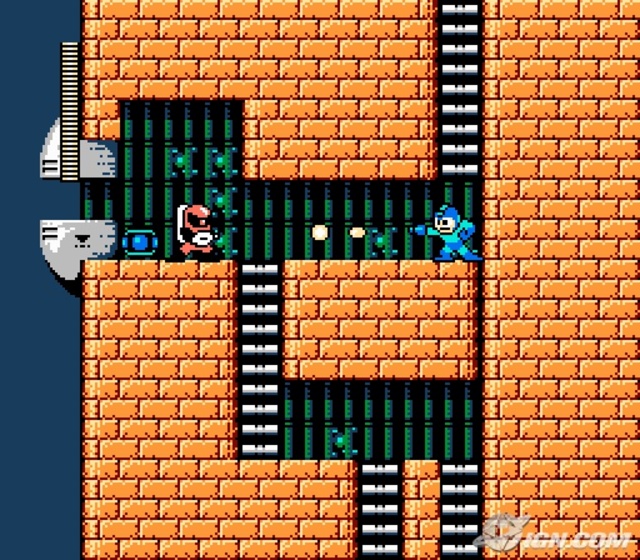
When it comes to why the "16-bit" is different, the obvious answer is that there were 2 systems that dominated the era. This is true, but there's another; expansion. In the life of the SNES, the developers convinced Nintendo to let them expand the game's abilities by adding special chips to the cartridge that were basically upgrades to the SNES. The Capcom chips and the FX chip all augmented how their games looked. Suddenly you had non-pixel based art inside games that could scale and render wire frames and eventually 3-D environments. I touched on why the 16-bit era does not have unified music in another post of mine, here. The gist of it is that the SNES used fully digital sound instead of being its own synthesizer unit. Developers were able to digitize actual musicians playing instruments instead of trying to approximate them using a sound wave manipulator.
What I would love to do is bring back that feeling of community that the Nintendo Entertainment System had brought. Is it just for nostalgia? Probably. Systems get better when there's more people battling it out. I do not want a unified current gen platform. I just think it would be really cool if someone came up with a set of sound resources, created a game engine standard that had its own "on purpose" flaws, and its own "on purpose" limitations, and then got a lot of indie developers to make games for this virtual system.
I think it could lead to some really cool occurrences. What if one developer's sound guy just blows everyone away at their programming of the synths, and they ask him to come and do music for their indie game? Well that sounds like the cool old days of 10 people teams makes NES games. Also, I'd love people pushing the limit of the standard and we end up getting the the screen flicker of the old games, but someone uses it to make it a "feature" in a game, maybe a boss has to stay hidden during certain conditions. It seems like a cool "blinking" boss, but its actually freeing up resources for some cool effects.
The standard would be pretty simple and so developing for it would be easy enough so that entire game jams brought up around the standard would be doable in a relatively small amount of time. Maybe switch it up and have teams be jumbled and mixed and matched to switch things up. With a common standard you can switch pixel artists and coders among teams and still have working teams because everyone is on the same standard.
I'm sure the standard would not last very long, and we might only get a handful of games worth playing, but I think its worth the potential pay off. I'd love for the indie community to have a new "Nintendo" experience completely artificially created for the soul purpose of seeing how today would react to the limitations of the "8-bit" era that actually created the entire feel of the "8-bit" era.